
Similar articles
New Pirelli Tyres for MotoGP 2027: What the September 850cc Tests Revealed
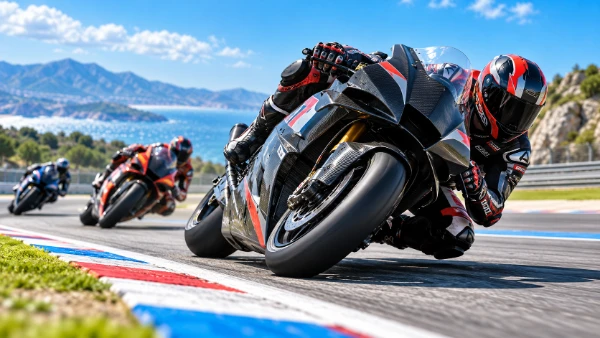
MotoGP’s move to 850cc engines in 2027 is arriving alongside another major change: Pirelli will replace Michelin as the premier class’s sole tyre supplier. On 21 September 2026, the Italian manufacturer put its developing tyres through an important test at Austria’s Red Bull Ring, with 18 riders representing all five bike makers. Early feedback highlighted strong grip and stability, while reported lap times suggested the smaller motorcycles could already be remarkably quick. Yet the session was a development exercise rather than a race or an official ranking.
Why September’s Pirelli Test Was a Major Step Towards MotoGP 2027
From the 2027 season, Pirelli will supply tyres to MotoGP as well as Moto2 and Moto3, the two classes it has served since 2024. Michelin, which has supplied the premier class since 2016, remains responsible for its tyres throughout 2026. That makes the change much more than a new logo on the sidewall. Every factory must learn how a different front tyre responds under braking, how the rear delivers traction and how both behave over a race distance.
The tyres are being developed for motorcycles that will look and behave differently, too. The 2027 regulations reduce maximum engine capacity from 1,000cc to 850cc, restrict aerodynamics and remove ride-height and starting devices. Race fuel capacity also falls from 22 to 20 litres, with 100% non-fossil fuel required. Pirelli therefore has to prepare rubber for a moving target: manufacturers are still refining the very bikes on which the final products will be used.
September’s Austrian outing was not the first opportunity to gather evidence. Pirelli began its MotoGP programme with five manufacturers’ test riders at Misano in September 2025, initially using adapted 1,000cc machinery. The test at Brno on 22 June 2026 was a further milestone because contracted race riders joined the programme for the first time, and some manufacturers brought genuine 850cc prototypes. Several riders completed Sprint-style or race-distance runs there.
Who Tested at Spielberg and What Tyres Did They Use?
The Red Bull Ring session on Monday, 21 September, involved 18 riders across Ducati, Honda, Yamaha, Aprilia and KTM. Honda fielded Johann Zarco, Diogo Moreira and Takaaki Nakagami; Ducati ran Marc Márquez, Fermín Aldeguer and Franco Morbidelli. Aprilia’s representatives were Marco Bezzecchi, Raúl Fernández and Lorenzo Savadori. Yamaha brought Toprak Razgatlıoğlu, Jack Miller, Augusto Fernández and Izan Guevara, while KTM’s group comprised Pedro Acosta, Brad Binder, Pol Espargaró, Maverick Viñales and Senna Agius.
Pirelli supplied soft, medium and hard slick compounds for both wheels. In simple terms, softer rubber can offer stronger immediate grip, while harder options are generally developed to withstand demanding conditions and longer use; the best choice always depends on the circuit and motorcycle. The company suggested starting with the softer tyres before trying the alternatives, but individual teams could organise their own programmes. Conditions were useful for comparison: the weather remained sunny and track temperatures ranged from 19°C to 38°C.
Not every participant rode the same type of machine. Some teams used their developing 850cc prototypes; others ran modified versions of the current 1,000cc motorcycles to imitate the 2027 rules. The test was also closed to the public and journalists, with no official timing classification released. Its primary purpose was to help Pirelli and the factories evaluate tyre behaviour, not to establish which brand would start 2027 as the favourite.
What the New Pirelli Tyres Revealed About Grip and Performance
The clearest confirmed finding from Spielberg was positive feedback on grip and stability. In its 21 September statement, Pirelli said the riders’ responses supported the performance of the solutions tested, particularly in these two areas. Grip helps riders brake, turn and accelerate with confidence; stability means the motorcycle behaves predictably as the load shifts. Pirelli did not, however, publish numerical grip measurements or declare that one compound was definitively the best.
The reported speed was striking. According to unofficial times reported by Sky Sport Italia, Diogo Moreira set a 1min 28.4sec lap for Honda, roughly half a second away from Jorge Martín’s pole time on the previous Saturday. Pedro Acosta was listed at 1min 28.9sec on KTM, with Marco Bezzecchi, Fermín Aldeguer and Johann Zarco all around 1min 29.1sec. They did not establish an official pecking order, and Pirelli itself supplied no certified results sheet.
One particularly interesting detail was Bezzecchi’s reported pace on a hard rear tyre. His lap was reportedly four-tenths quicker than the fastest lap recorded during the preceding Austrian Grand Prix race. That offers a useful reminder that harder does not automatically mean slow, especially once a bike is adjusted to suit its tyres. Aldeguer was also reported to have worked through all three compound choices, while Márquez concentrated on shorter runs.
Why the September Lap Times Need Careful Interpretation
There is an important limit to any comparison with the 2026 Grand Prix. The Austrian test brought together prototype 850cc bikes and altered 1,000cc machines, often on differing tyre compounds and fuel loads. Some riders were experiencing Pirelli’s tyres for the first time, while others already knew them from previous sessions. Without consistent conditions and official timing, the numbers are clues rather than results.
Early rider impressions nevertheless help explain why the development programme has attracted attention. In May 2026, after riding a future-specification Honda, test rider Aleix Espargaró described the Pirelli rubber as particularly grippy and said the lighter, less powerful motorcycle was enjoyable to change direction. His comments predated the September session and should not be mistaken for a Spielberg verdict, but they fit the broader picture of riders adapting to a different relationship between engine power and cornering speed. Whether that produces easier overtaking will depend on complete bike performance, not tyres alone.
Teams also need to think beyond a single headline lap. A Grand Prix requires a front tyre that remains trustworthy through repeated hard braking and a rear that can deliver traction when the rider opens the throttle after many laps. The June Brno programme included longer simulations, while September broadened the comparison of soft, medium and hard options. Pirelli’s positive summary is encouraging, but it does not yet provide public evidence of identical tyre life across circuits, brands or weather conditions.
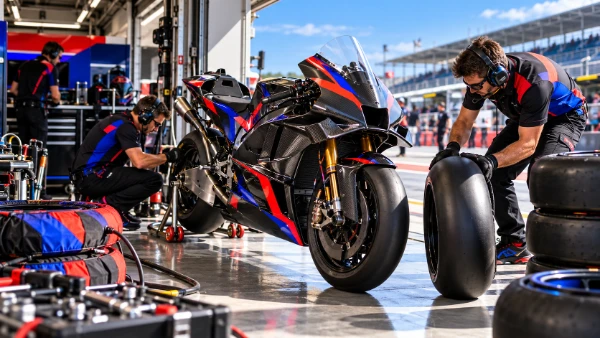
How the 850cc Era Could Change MotoGP Racing in 2027
The switch to 850cc engines is intended to reduce outright speed without removing the skill involved in riding a MotoGP bike quickly. Less engine capacity, tighter aerodynamic rules and the loss of ride-height devices should make the motorcycles behave differently under braking and acceleration. Strong corner grip could help preserve quick lap times even as top speeds fall, a possibility illustrated by the unofficial Spielberg figures. It is still too early to claim that the new machines will always match today’s race pace.
For manufacturers, adapting to Pirelli will be as important as extracting power from the new engines. Ducati, Aprilia, KTM, Honda and Yamaha all collected data in Austria, but each arrived with different machinery and priorities. A rider may need to adjust braking points, body position or throttle timing; engineers may need to change the balance of the motorcycle to make the most of its tyres. No factory can assume that success under Michelin automatically carries across.
The change may also affect how races unfold. Riders who can keep their front tyre in good condition while following another bike, or preserve rear grip when accelerating out of slow corners, could gain options for late overtakes. These are plausible consequences of the new rules rather than outcomes confirmed by one test. The real measure will be whether the tyres perform consistently when the full field races together in 2027.
What Pirelli Must Still Prove Before the 2027 Season Begins
The main unfinished task is turning promising test tyres into a dependable race range. Pirelli must decide which constructions and compounds provide the right balance of grip, stability, durability and predictable behaviour over different tracks. Spielberg provided valuable evidence from dry-weather slicks, but its sunny conditions could not answer every question about rain, cooler asphalt or particularly abrasive circuits. Success will be judged across an entire championship, not only on an encouraging Austrian afternoon.
The next major shared checkpoint is scheduled for 1 December 2026 at Valencia, following the season-ending Grand Prix. Unlike the September session, it is expected to bring together the complete 2027 rider line-up and provide official timing. That should allow a much clearer comparison between motorcycles built for the new rules, although it will still be early testing rather than a race weekend. The important questions concern repeatable performance, rider confidence and whether the tyres behave predictably across different bikes.
As of October 2026, September’s message is encouraging but specific: 18 riders tested multiple Pirelli slick compounds in Austria, the manufacturer reported favourable grip and stability feedback, and unofficial laps showed impressive pace from some developing 850cc bikes. None of that guarantees a particular team will dominate, that tyre wear is fully understood or that closer racing is inevitable. What it does show is that MotoGP’s biggest combined tyre and engine change in years is progressing through real track work, with enough encouraging evidence to make the Valencia test an important next step.