
Similar articles


Women in Formula E: How Electric Racing Series Are Creating New Career Opportunities
Formula E has become one of the most discussed championships in modern motorsport, not only because of electric technology but also because of the changing professional landscape around racing. While traditional motorsport has often struggled with gender imbalance, Formula E has introduced a more accessible environment where women can build careers as drivers, engineers, strategists, mechanics, data analysts, presenters, sustainability specialists and executives. By 2026, the championship has developed into a global competition that combines innovation, environmental responsibility and broader representation across multiple areas of the industry.
The Changing Role of Women in Modern Motorsport
For decades, women faced significant barriers when attempting to enter professional racing. Limited sponsorship opportunities, restricted access to junior categories and outdated stereotypes often reduced the number of female participants before they reached elite competition. Formula E arrived during a period when motorsport organisations were beginning to reassess how talent development should work in a more inclusive era.
Unlike many traditional championships, Formula E was created with a modern commercial and social structure from the beginning. Teams entering the series were already connected with major automotive manufacturers and technology companies focused on innovation rather than historic conventions. This environment opened additional opportunities for women not only behind the wheel but also within technical departments, communications teams and operational management.
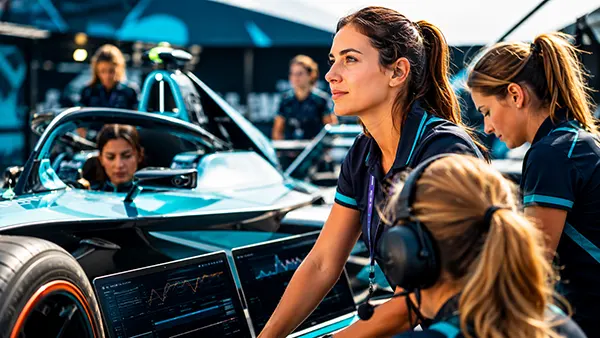
By 2026, female professionals are increasingly visible throughout the Formula E paddock. Women now work in battery development, race strategy, simulation engineering, sustainability consulting and broadcast production. The championship’s emphasis on digital technology has also encouraged more recruitment from STEM-related backgrounds, where diversity programmes across Europe and Asia have started producing measurable results.
Why Electric Racing Attracts a Different Generation of Talent
Formula E has positioned itself differently from older racing categories by connecting motorsport with subjects such as renewable energy, urban mobility and advanced software systems. Younger professionals entering the industry often see the championship as a place where engineering innovation matters as much as racing tradition. This shift has made the environment more appealing to women pursuing technical education and careers linked to future transport technologies.
Another important factor is visibility. Formula E teams and manufacturers actively promote educational partnerships, internship programmes and public workshops aimed at encouraging broader participation in engineering and motorsport operations. Several teams have collaborated with universities and technical institutes to support women entering data science, electrical engineering and automotive software development.
The growth of esports and simulator training has also reduced some financial obstacles traditionally associated with motorsport. Female drivers and analysts can now gain experience through digital racing programmes connected to Formula E teams. These systems provide additional pathways into professional racing environments without requiring the same level of early financial investment often seen in conventional junior formulas.
Career Paths Beyond Driving in Formula E
Although racing drivers remain the public face of the championship, Formula E depends heavily on specialised technical staff. Electric racing requires advanced battery management, software analysis and energy optimisation during every event weekend. These areas have become important entry points for women with expertise in mathematics, coding, engineering and sustainability research.
Data analysis has become one of the fastest-growing professions within Formula E operations. Teams monitor thousands of variables during practice sessions and races, including energy consumption, tyre efficiency, braking regeneration and thermal performance. Female engineers increasingly contribute to these systems by developing predictive models and race simulations that directly influence strategic decisions during competition.
Media and communications roles have expanded as well. Formula E places strong emphasis on digital engagement, social media coverage and fan interaction. Women now hold influential positions in broadcasting, journalism, documentary production and team communications. Their work shapes how audiences understand electric racing and sustainability-focused motorsport narratives.
Engineering and Sustainability Roles Are Expanding Rapidly
One of the defining characteristics of Formula E is its close relationship with sustainable technology development. Automotive manufacturers participating in the championship use racing conditions to test energy efficiency systems that may later influence road vehicles. This has created demand for professionals specialising in battery research, electrical systems and environmental performance analysis.
Women working in these departments are increasingly visible at both team and manufacturer levels. Engineers contribute to regenerative braking systems, energy deployment software and charging infrastructure research connected with future electric mobility projects. Because Formula E operates in partnership with large automotive companies, successful careers within the series can also lead to long-term positions in commercial vehicle development.
Sustainability reporting has become another major employment area. Formula E promotes carbon reduction initiatives, urban environmental programmes and renewable energy partnerships during race weekends. Specialists responsible for environmental auditing, logistics optimisation and sustainability communications now play a critical role in championship operations. Many of these positions have attracted professionals from environmental science and policy backgrounds rather than traditional motorsport careers.
How Formula E Influences the Future of Motorsport Careers
The influence of Formula E extends beyond its own championship structure. Other racing categories have started adopting similar diversity initiatives, educational partnerships and technical recruitment models after observing the commercial success of electric racing. As manufacturers continue investing in electric vehicle technology, experience gained within Formula E is becoming increasingly valuable across the automotive industry.
Female participation in karting and junior electric racing programmes has also increased in recent years. Organisations connected with Formula E have launched mentorship schemes, scholarship projects and driver development academies aimed at supporting young women entering motorsport. These programmes focus not only on racing skills but also on engineering knowledge, media training and sponsorship management.
The commercial image of Formula E has contributed to these changes as well. Sponsors associated with technology, sustainability and innovation often prefer partnerships that reflect broader social representation. This commercial direction encourages teams to build more diverse workforces and create long-term development pathways for women across different departments.
The Long-Term Impact on Global Motorsport Culture
By 2026, Formula E has demonstrated that modern motorsport can evolve beyond traditional expectations. The championship has shown that technical excellence, commercial growth and broader representation can develop together without reducing competitive standards. Women now participate in areas of racing that were previously dominated almost entirely by men, particularly in technical and operational leadership roles.
The visibility of these professionals has influenced younger audiences who previously viewed motorsport as inaccessible. Schools, universities and engineering organisations increasingly use Formula E examples when encouraging girls to pursue careers in science, technology and automotive development. The championship has therefore become more than a racing series; it now functions as a public example of how modern motorsport structures can change.
Future growth is likely to continue as electric vehicle industries expand worldwide. The combination of racing, sustainability and digital innovation gives Formula E a distinct position within global sport. For women seeking careers connected with engineering, mobility, communications or professional racing, the championship now offers opportunities that were far less accessible in previous generations of motorsport.