
Similar articles

How Active Aerodynamics Will Reshape Formula 1 Race Strategy from 2026

The 2026 Formula 1 regulations introduce one of the most significant technical shifts in decades: fully integrated active aerodynamics. Unlike previous eras where drag reduction systems operated within narrow limits, the new concept allows dynamic adjustment of both front and rear aerodynamic elements across multiple phases of a lap. This change does not simply alter car performance — it redefines how teams approach race strategy, tyre management, overtaking, and even driver behaviour. Understanding these implications requires looking beyond raw speed and into the mechanics of decision-making during a Grand Prix.
Active Aerodynamics and Its Immediate Strategic Impact
The primary change introduced in 2026 is the ability for cars to switch between high-downforce and low-drag configurations depending on track conditions and race phases. On straights, reduced drag improves top speed and energy efficiency, while in corners, increased downforce restores grip. This dual-mode system removes the traditional compromise engineers faced when selecting aerodynamic setups for a race weekend.
From a strategic standpoint, this flexibility allows teams to adapt in real time rather than relying solely on pre-race simulations. Previously, a car optimised for qualifying might struggle in race conditions due to tyre degradation or fuel load sensitivity. With active aerodynamics, teams can mitigate these weaknesses dynamically, adjusting the balance between speed and stability lap by lap.
Another immediate effect is the reduced importance of static aerodynamic efficiency as a defining factor between teams. While design quality remains critical, the performance gap may narrow as in-race adaptability becomes a competitive tool. Strategy departments will play a larger role, interpreting data and making decisions that directly influence aerodynamic modes throughout the race.
Impact on Overtaking and Defensive Driving
Active aerodynamics fundamentally changes how overtaking is executed. The traditional DRS system provided a temporary advantage in specific zones, often leading to predictable passing points. In 2026, drivers can access variable drag reduction more flexibly, making overtaking less dependent on predefined sections of the track.
This shift introduces greater unpredictability into wheel-to-wheel racing. Drivers may attempt overtakes in unconventional areas, using low-drag configurations to gain momentum before switching to high downforce for corner entry. As a result, defensive driving becomes more complex, requiring constant awareness of an opponent’s aerodynamic mode.
Teams will also need to decide when to prioritise attack versus defence. Excessive use of low-drag settings may increase vulnerability in corners, while conservative strategies could leave drivers exposed on straights. The balance between aggression and control will become a central theme in race strategy discussions.
Tyre Management and Energy Efficiency in the New Era
Tyre degradation has always been a cornerstone of Formula 1 strategy, and active aerodynamics adds a new layer to this equation. By increasing downforce in corners, drivers can reduce sliding and preserve tyre life, particularly on circuits with high lateral loads. Conversely, low-drag modes may increase tyre stress under acceleration due to reduced stability.
Teams will need to integrate aerodynamic adjustments with tyre strategies more closely than ever before. Instead of relying solely on pit stop timing, engineers can influence tyre wear through real-time aerodynamic tuning. This creates opportunities to extend stints or push harder when necessary without committing to a fixed approach.
Energy management also becomes more efficient under the new regulations. Lower drag on straights reduces fuel consumption and improves the effectiveness of hybrid systems. This allows teams to deploy energy more strategically, potentially altering the timing of overtakes or defensive phases during a race.
Strategic Trade-offs Between Speed and Stability
Despite the advantages of active aerodynamics, trade-offs remain unavoidable. Running in low-drag mode maximises straight-line speed but reduces aerodynamic grip, increasing the risk of errors in braking zones and corners. High-downforce settings improve control but limit overtaking potential.
These trade-offs will vary depending on track characteristics. Circuits with long straights, such as Monza or Baku, may favour aggressive low-drag strategies, while technical tracks like Monaco will prioritise stability. Teams must therefore tailor their aerodynamic usage to each circuit rather than relying on a universal approach.
Driver input will also play a more significant role. Some drivers may prefer a stable car with predictable handling, while others may exploit low-drag configurations to gain positions. This personalisation introduces another variable into strategy planning, making driver-engineer communication even more critical.
Long-Term Strategic Evolution and Team Operations
Beyond individual races, active aerodynamics will influence how teams structure their operations. Strategy departments will require more advanced simulation tools capable of modelling aerodynamic mode changes in real time. Data analysis will become increasingly complex, with teams processing vast amounts of information to optimise decisions during a race.
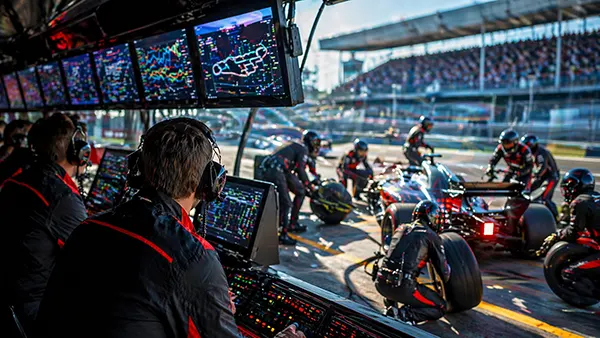
Pit wall communication will also evolve. Engineers must provide drivers with clear instructions on when to switch modes without overwhelming them with information. This requires streamlined processes and improved interfaces to ensure decisions are executed quickly and accurately.
Over the course of a season, teams that adapt fastest to these demands are likely to gain a competitive edge. Consistency in decision-making and the ability to interpret data under pressure will become as important as car performance itself.
Implications for Championship Battles
In a championship context, active aerodynamics introduces greater variability in race outcomes. Teams with strong strategic execution may outperform faster rivals, particularly in mixed conditions or unpredictable races. This could lead to closer title fights and fewer dominant performances over a season.
Reliability also becomes a factor. The added complexity of movable aerodynamic components increases the risk of mechanical issues. Teams must balance performance gains with durability, ensuring that aggressive strategies do not compromise race finishes.
Ultimately, the 2026 regulations shift Formula 1 further towards a data-driven sport where success depends on the integration of engineering, strategy, and driver skill. Active aerodynamics is not merely a technical innovation — it is a catalyst for a broader transformation in how races are planned and executed.